A Historical Agreement to Manufacture Vertical Axis Wind Turbines Marks a New Chapter in Indiaˋs Renewable Energy Journey
A Partnership Built on Purpose
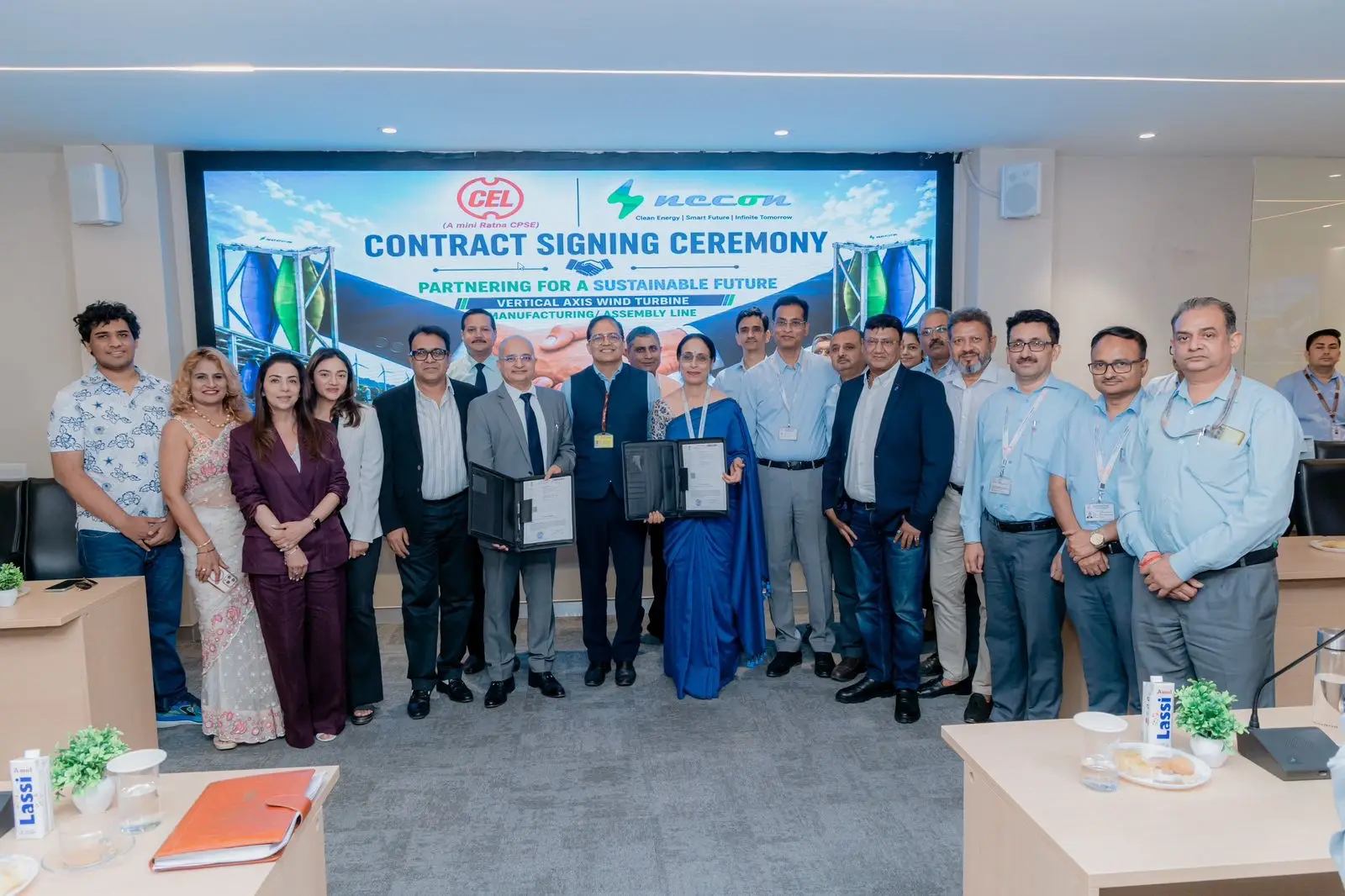
On 3rd June 2026, something meaningful happened in India’s clean energy story.
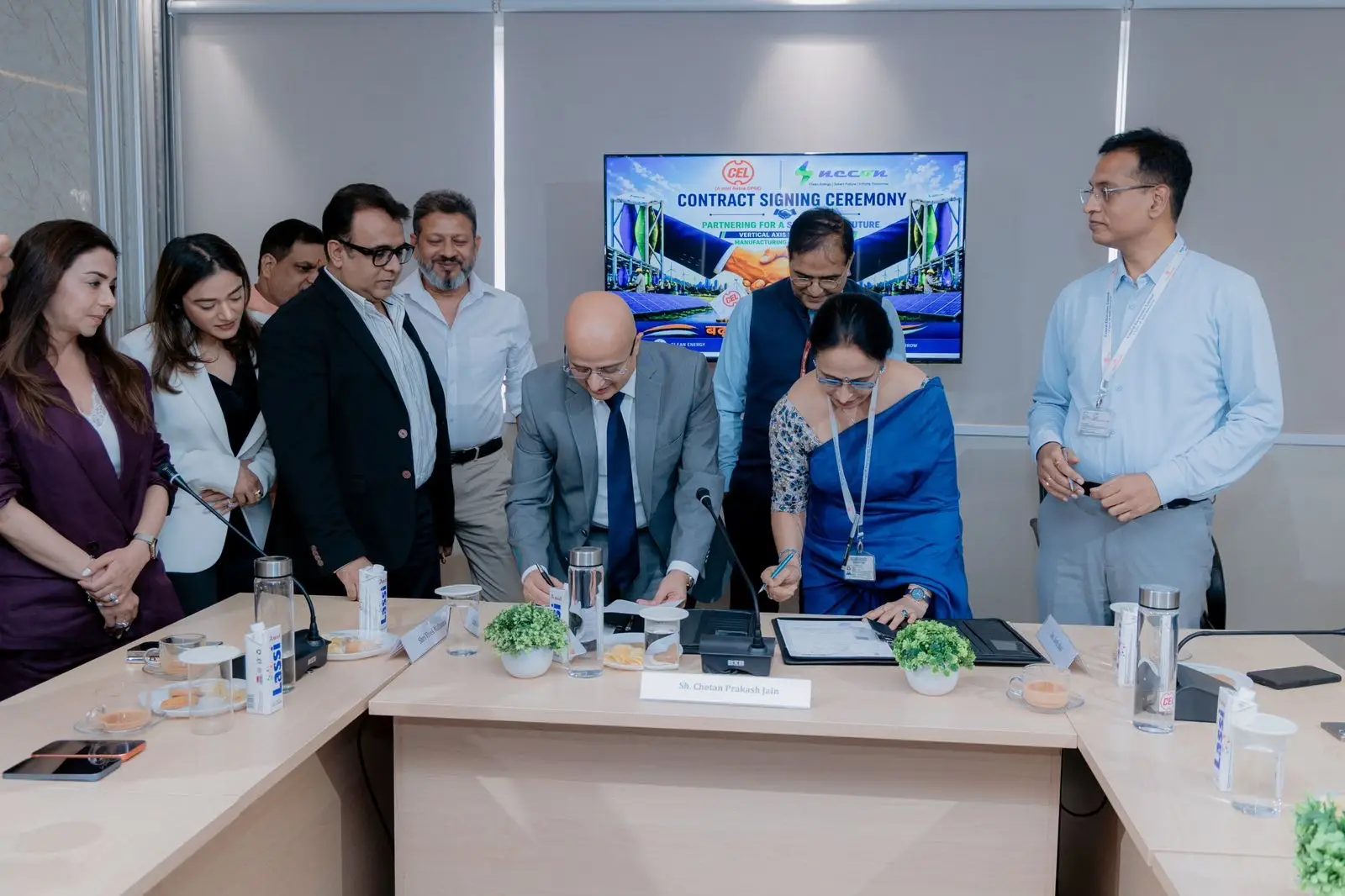
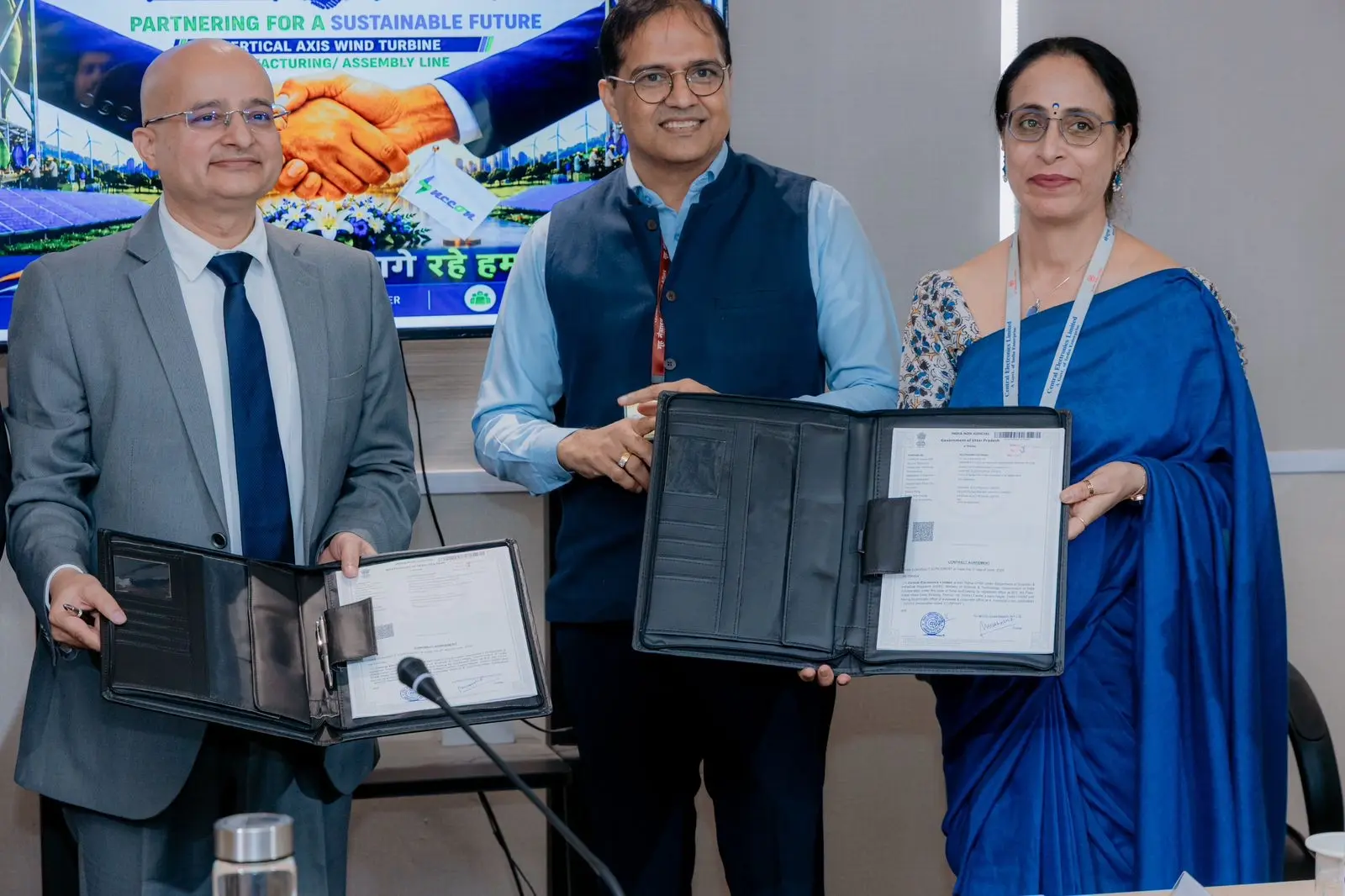
NECON and Central Electronics Limited (CEL) came together to sign a formal agreement for the manufacturing and assembly of Vertical Axis Wind Turbines (VAWTs). This was not just a contract signing. It was a shared commitment between two organisations that believe India’s energy future must be cleaner, smarter, and built at home.
The ceremony marked the beginning of a collaboration that brings together CEL’s decades of experience in electronics and technology with NECON’s strong foundation in engineering and infrastructure. Together, they are setting the stage for something truly significant.
Why This Agreement Matters
India is at an exciting crossroads. The country is growing fast, and so is its need for energy. At the same time, India has made bold promises to the world to increase its use of clean and renewable energy. Meeting these goals requires action, not just intention.
The agreement between NECON and CEL is exactly that kind of action.
By choosing to manufacture Vertical Axis Wind Turbines right here in India, both organisations are sending a clear message: India does not just want to use clean energy. India wants to build it. This partnership creates a foundation for long-term, homegrown renewable energy solutions that can serve communities, industries, and institutions across the country for years to come.
What Are Vertical Axis Wind Turbines and Why Do They Matter?
Most people are familiar with the tall, three-bladed wind turbines seen on open plains and hilltops. Vertical Axis Wind Turbines work differently. Their blades rotate around a vertical shaft, which gives them some unique advantages
They can capture wind from any direction without needing to reposition themselves. They tend to work well even in areas where the wind is not very strong or consistent. They are generally quieter, safer for birds, and can be installed in a wider variety of locations including urban areas, rooftops, and smaller land spaces.
These qualities make VAWTs a very practical choice for a country like India, where wind patterns, geography, and energy needs vary greatly from one region to another. By manufacturing these turbines locally, NECON and CEL are making clean wind energy more accessible to a much larger part of the country.
Together, we are not just building turbines. We are building the future.
Supporting India’s Renewable Energy Ambitions
India has committed to generating a significant portion of its electricity from renewable sources in the years ahead. Wind energy is one of the most important parts of that plan. However, reaching these targets requires not just installation of turbines but also the ability to manufacture, maintain, and innovate locally.
The NECON and CEL collaboration directly supports this national vision. Local manufacturing means that the supply chain becomes stronger and more reliable. It means that skilled jobs are created within India. It means that the country becomes less dependent on imports for its clean energy infrastructure. Every turbine assembled under this partnership brings India one step closer to a future where clean energy is not a distant goal but an everyday reality.
The Power of Making It in India
There is something deeply powerful about manufacturing your own solutions. When a country builds its own clean energy equipment, it gains control over quality, cost, and availability. It builds technical knowledge within its own workforce. It creates industries and opportunities that benefit local communities.
The NECON and CEL agreement is a strong example of this thinking in action. Both organisations have chosen to invest in Indian capability and Indian talent. This approach aligns perfectly with the national spirit of self-reliance that is driving so many industries forward today. As production grows and processes improve, the cost of clean energy solutions can come down further, making them available to even more people and organisations across India.